

The Mendip divide: why Glastonbury and Shepton are being left behind
By Laura Linham 3rd May 2026


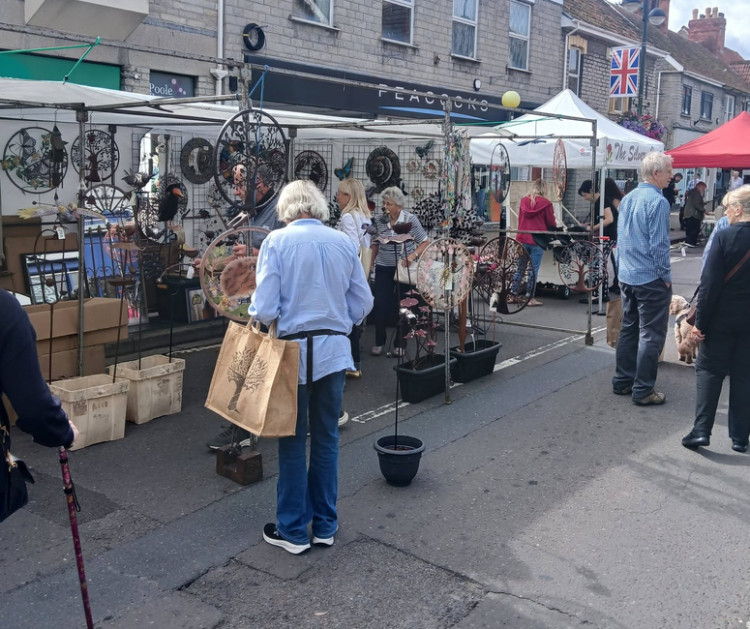
Parts of Glastonbury and Shepton Mallet are among Somerset's most deprived neighbourhoods, with new figures revealing a clear divide between Mendip's market towns.
While Wells and Street remain closer to the national average, Shepton North and Glastonbury Central are now ranked within the most deprived fifth of neighbourhoods in England.
Across Somerset, 32 neighbourhoods now fall into that category, up from 29 in 2019.
The data points to a deeper issue than short-term cost-of-living pressures. In both towns, deprivation is being driven by a combination of long-term economic change, housing pressure, weak transport links and lower-paid work.
In Shepton Mallet, the picture is complex but consistent.
The town scores around the national average overall on deprivation measures, but housing and living environment scores are significantly lower. Around 23 per cent of children are classed as living in income-deprived households, alongside 11.3 per cent of older residents.
The town's own economic development plan sets out the challenge in practical terms. It records a 19.4 per cent retail vacancy rate, well above the 13.5 per cent average quoted for high streets across England, alongside empty buildings, limited private investment and a High Street that struggles to attract footfall.
Previous planning work has also highlighted the long-term impact of out-of-town retail, particularly Townsend Retail Park. While overall spending has stayed in Shepton, it has not translated into activity in the historic centre.
Download our Nub News App!
- It’s FREE and available now- Breaking news notifications
- Your Town in Your Pocket


Local assessments also point to a lack of community infrastructure, including no town hall, no leisure centre and no youth club. At the same time, parts of the town have been identified as being at high risk of digital exclusion, limiting access to jobs, education and services.
Transport remains a barrier. Shepton has no railway station, with Castle Cary around 6.3 miles away and Bruton around 7 miles away. For households without a car, work, college and healthcare are harder to access.
In Glastonbury, the figures are sharper.
Glastonbury Central sits among the most deprived neighbourhoods in Somerset, with earlier ward-level data placing parts of the town among the most deprived nationally for employment, health and income.
The town's investment plan describes an "underlying socio-economic reality of deprivation, poverty and low aspiration" behind its global reputation.
Glastonbury lost major employers when its sheepskin and leather industries declined and closed in the late 20th century. Those industries had supported local employment for more than 200 years.
What replaced them was a more fragmented economy based on tourism, retail, micro-businesses and part-time work - a shift that made income less stable.
The town plan records unemployment rising from 3.6 per cent to 9.5 per cent, particularly affecting lower-paid and part-time workers in retail and hospitality. It also highlights a reliance on seasonal and gig-based income linked to tourism and the Festival.

Skills are part of the picture too., with 23 per cent of working-age residents in Glastonbury having no qualifications, with more residents in lower-skilled work and fewer in higher-income roles than regional and national averages.
Housing adds further pressure. Across Somerset, house prices sit at around nine times average earnings, with affordability worst in the east of the county. In Mendip, median house prices were recorded at £307,125 in 2022, the highest in Somerset.
In Glastonbury, land constraints limit new development, while demand remains high. The result is increased pressure on existing housing and reduced availability in the private rented sector.
That pressure is visible in the number of people living outside traditional housing. Local authority data shows vehicle dwellers in Glastonbury rising from around 45 in 2018 to about 300 in 2024, making it one of the highest concentrations in the country.
Previous Somerset data has shown large gaps in life expectancy between more and less deprived areas, with differences of more than a decade recorded within the district.
Professor Mark Shucksmith, Professor of Planning at Newcastle University, said: "Nobody should be disadvantaged because of where they live. But poor and vulnerable people in rural areas very much are. Life is tough for anyone living in poverty but those who live in the countryside face a very specific set of additional challenges."
He added: "Rural citizens should expect fairness and similar rights of citizenship - that is, fair outcomes including access to services which meet needs, investment in social and economic infrastructure, transparent decisions based on evidence, equal opportunities to participate in society, and a fair hearing and an effective voice in decision making."
Transport is a key part of that.

Limited public transport can restrict access to jobs, education and healthcare, particularly for lower-income households. Digital access and the cost of heating and travel also play a bigger role in rural areas.
Dr Jane Atterton, of Scotland's Rural College, said: "The rising cost of living is also hitting households in rural Britain even harder than those in towns and cities. This is because they have to spend a higher proportion of their household income on fuel for transport and on heating their homes which tend to be older, poorly insulated and often not connected to mains energy supplies."
The contrast with nearby Street and Wells is clear.
Street still faces pressure, but its overall deprivation score is around the national average. Its income, employment and education scores are all 5 out of 10, while health scores 6 out of 10, housing 6 out of 10 and living environment 8 out of 10.
The village's child poverty figure is higher than Shepton's, at 29.8 per cent, while older person poverty is 17.3 per cent. But Street also benefits from a stronger retail base, Clarks Village, historic employment links with Clarks, better footfall and a living environment score that is stronger than the other towns reviewed.
Wells performs better overall.
Its overall deprivation score is 7 out of 10, with income, employment and education all at 7 out of 10. Health scores 8 out of 10, while housing scores 4 out of 10 and living environment 5 out of 10.
Child poverty in Wells is recorded at 24.9 per cent, while older person poverty is 8.8 per cent, the lowest of the four places.
Wells also benefits from its role as a service centre, with jobs in education, health, administration, tourism and the wider visitor economy. Those factors do not remove deprivation, but they help spread opportunity more evenly.
In Shepton Mallet and Glastonbury, the data shows a different pattern. Deprivation is not driven by one issue, but by a combination of weaker local economies, housing pressure, limited transport, lower wages and fewer opportunities.
The figures suggest those pressures have built up over time.
And without targeted investment in housing, jobs, transport and services, the gap between Mendip's towns, villages and cities is unlikely to close.
More local stories
Download our Nub News App:
- It’s FREE and available now
- Breaking news notifications
- Your Town in Your Pocket

Share: