
Glastonbury plan reveals town’s blueprint to 2040
By Laura Linham 1st Jul 2026
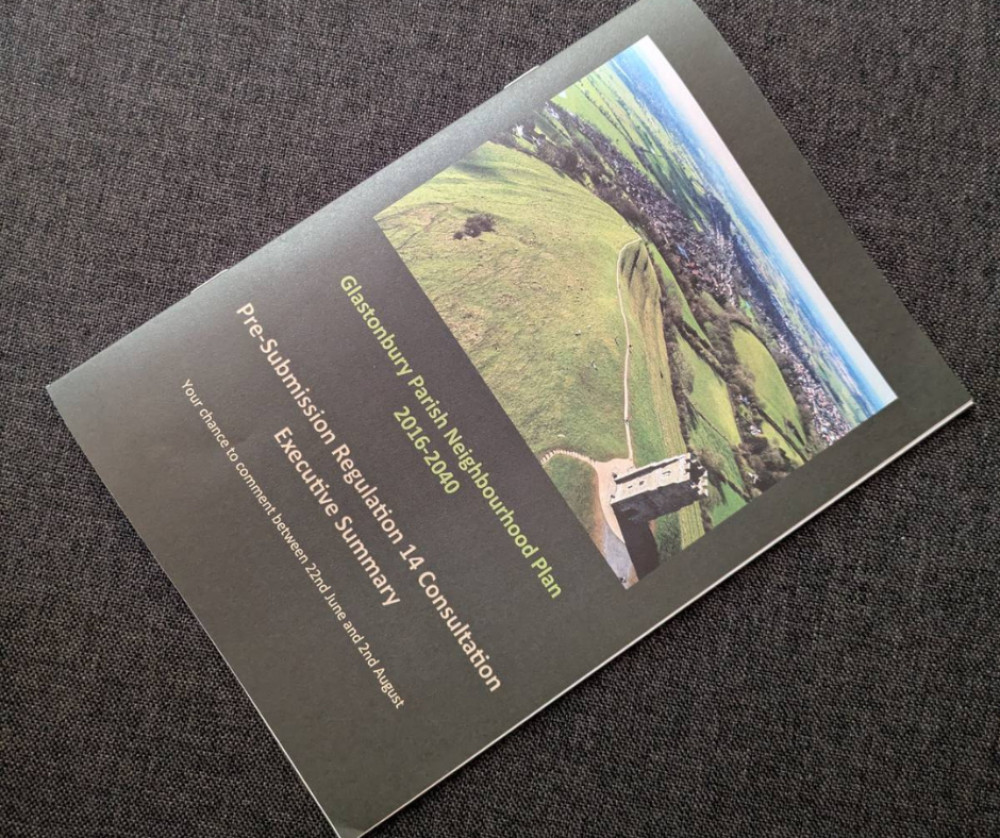

Glastonbury's draft neighbourhood plan sets out the town's blueprint for the next 15 years — from new homes and green spaces to flooding, tourism, Beckery and the future of the Tor's setting.
The June 2026 Regulation 14 draft runs to around 90 pages and is now out for consultation. Once finalised, examined and approved by local referendum, it would become part of the wider planning framework used to decide applications in the parish.
In plain English, this is Glastonbury trying to set some local ground rules before the next round of housing, tourism, business and infrastructure pressure arrives. It does not stop development, and it cannot override national planning policy, but it can help shape what is built, where it goes and what the town wants protected.
The plan covers housing, the town centre, green spaces, wildlife, heritage, climate, flood risk, transport, tourism, public art, small businesses and the long-discussed future of Beckery. It also tries to deal with a very Glastonbury problem: how to allow change without losing the town's character, landscape, history and odd magic.
No new housing sites are allocated
The biggest point is what the plan does not do.
The draft does not allocate any new housing sites beyond those already identified through the wider local plan process. A call for sites was carried out, but the sites considered were found unsuitable for formal allocation because of constraints including flood risk, drainage, phosphate neutrality, heritage impact, access, highways, landscape and deliverability.
That does not mean no more homes. The plan supports small-scale infill, windfall sites and previously developed land inside the settlement boundary, where proposals fit planning rules and local character.
But it is clear that spreading beyond the existing town edge will face a much tougher test. The plan says this reflects Glastonbury's constraints rather than a refusal to plan for growth.
Download our Nub News App!
- It’s FREE and available now- Breaking news notifications
- Your Town in Your Pocket


Housing: smaller, affordable and local
The draft recognises Glastonbury as a principal settlement where housing growth is expected.
It refers to a requirement for 1,000 new homes under the former Mendip Local Plan, with 869 already completed or committed, leaving a residual requirement of 131 homes.
The plan puts strong emphasis on affordable housing, smaller homes and places for people who want to live and work locally. It says evidence points to a need for one and two-bedroom homes, starter homes, downsizing options, accessible homes, accommodation for non-traditional and non-bricks-and-mortar dwellers, and energy-efficient homes.
For developments of five or more homes, the draft says at least 40 per cent should be one or two-bedroom properties, unless there is a clear reason to provide a different mix. For developments of 10 or more homes, applicants would be expected to show how they meet local needs, including older people and residents looking to downsize.
Green spaces: 18 sites named for protection
The plan proposes 18 Local Green Spaces for protection across Glastonbury.
They include St Dunstan's Recreation Park, Lowerside Recreation Area, the Green Burial Field, Glastonbury Football Club, Common Moor Allotments, St Edmund's Well Field, Herbies Field, Manor House Road Recreation Area, Chalice Orchard, Abbey Park, Fishers Hill Recreation Area, Northover Jubilee Park and Pomparles Bridge.
Development on those spaces would not normally be allowed unless there was strong evidence that it would not undermine why the land was protected. Where loss of green space was shown to be essential, mitigation or compensation would be expected.
The draft describes these places as important for recreation, wildlife, visual breaks, heritage, green corridors and the town's "green lungs".
Flooding, drainage and climate
Flooding is one of the plan's biggest practical issues.
Glastonbury is surrounded on three sides by the Somerset Levels flood plain, and parts of the parish are affected by fluvial and surface water flood risk. The plan says this limits where the town can realistically grow.
New development would need to show it will not worsen pressure on drainage, wastewater, electricity networks or flood risk. It would also need to consider sustainable drainage, phosphate neutrality, wastewater capacity, long-term maintenance and climate resilience.
The draft also points to the town's aim of becoming carbon neutral by 2040. New homes would be expected to reduce energy demand and carbon emissions, with support for roof-mounted solar panels, low-carbon energy networks, electric vehicle charging and better energy efficiency.
Heritage is not just scenery
The plan makes clear that Glastonbury's history is not just a backdrop for postcards.
Development would be expected to protect heritage assets, important views, the Conservation Area, local buildings, archaeology and the setting of Glastonbury Tor and Glastonbury Abbey.
The draft also recognises the town's less tangible heritage, including myth, pilgrimage, spiritual traditions and cultural identity. That does not mean new buildings have to look old, but the plan says design should respond properly to Glastonbury's setting.
In practice, the plan supports high-quality, locally distinctive design, including contemporary design where it is well handled. The key test is whether it fits the town, rather than whether it copies the past.

Beckery could become a civic and cultural quarter
Beckery gets its own section, and it is one of the more ambitious parts of the plan.
The draft supports the idea of Beckery becoming a civic and cultural quarter, with possible uses including community facilities, a new library, arts centre or theatre, civic offices, police and community safety facilities, creative studios, learning hubs, galleries, performance spaces and pop-up exhibition space.
It also describes Beckery as a possible area for affordable homes, supported housing, self-build projects and safe permanent non-traditional sites for people living in vehicles.
The plan says the area should be treated as a community-first project, not simply as a leftover industrial site.
Art, murals and creative space
Public art also gets unusually serious treatment.
For developments of 10 or more homes, the plan says applicants should show how they have considered public art, creative expression and street art as part of design and placemaking.
It points to the Glastonbury Mural Trail, the graffiti wall at the skate park, the Northload Street mural, the Windmill Hill youth shelter and the mural at St Benedict's School as examples of community-led art.
The plan says public art can improve public spaces, support wellbeing and help build pride in the town.
Town centre and small businesses
The plan wants Glastonbury town centre to stay active, useful and locally distinctive.
It supports shops, work hubs, community uses, cultural spaces, visitor facilities, food and drink venues, overnight accommodation, better use of upper floors and temporary or pop-up uses in empty premises.
But it also warns against losing active ground-floor frontages in key shopping streets. In other words, it wants the town centre to change without hollowing out the bit people actually use.
Small businesses, craft, arts, creative industries and flexible workspace are strongly supported. The plan also backs remote working, shared workspaces, reuse of existing buildings and the protection of locally important employment areas.
Tourism, but not at any cost
Tourism is treated as vital to Glastonbury's economy, but the plan does not give it a blank cheque.
The draft supports visitor accommodation, entertainment venues, attractions and evening economy uses where they bring clear economic and social benefits. But proposals would also have to avoid unacceptable harm from noise, traffic, congestion, disturbance or highway safety problems.
The plan highlights the Abbey, the Tor, the town centre and Glastonbury's role as a place of pilgrimage and cultural interest. It also notes that Glastonbury Festival is at Pilton, around five miles away, but still brings extra traffic and visitor pressure into the town.
New tourism development would be expected to provide safe and inclusive access by walking, cycling, public transport and mobility-assisted access where possible.
Transport and active travel
The plan wants walking, cycling and other non-car travel built into development from the start.
It says new layouts should prioritise pedestrians and cyclists, provide secure cycle parking, include green infrastructure in parking areas and make sure cars do not dominate streets.
That is not the same as pretending cars will vanish. The draft recognises that private cars will remain part of life in Glastonbury, but says new development should reduce unnecessary car dependence and avoid creating streets where parking takes over.
Self-build, micro-homes and low-impact ideas
There is also support for self-build, custom-build and more unusual housing models.
The plan backs climate-responsive design, modular construction, compact living, low-impact and off-grid homes, flood-resilient development and other innovative housing forms where they meet planning, heritage, flood and environmental rules.
It makes clear that innovation is not a shortcut around planning constraints. But it does leave room for raised structures, modular homes, relocatable homes and low-impact dwellings where they are properly justified.
On sites of 40 homes or more, the plan says five per cent of dwellings should be provided as serviced plots for self-build or custom-build homes, unless constraints or lack of demand justify otherwise.
What happens next?
The plan is still a draft.
After the current consultation, comments can be considered and changes may be made. It would then need to be submitted to Somerset Council, independently examined and, if it passes that stage, put to a local referendum before it can be formally made.
For residents, the question is simple: does this plan get the balance right?
It tries to make room for homes, work, tourism and community life, while protecting the Tor, the Abbey, the Levels, green spaces, local businesses, heritage and the character that makes Glastonbury Glastonbury.
The full draft and topic pages can be read on the Glastonbury Neighbourhood Plan page.
More local stories
- Glastonbury care firm lands in Westminster Abbey leadership book
- Street school lands 21 Commonwealth Games selections
Subscribe to the free Glastonbury Nub News newsletter Get the biggest Glastonbury stories straight to your inbox.
Download our Nub News App:
- It’s FREE and available now
- Breaking news notifications
- Your Town in Your Pocket

Share: