Glastonbury River Brue Charter: what you need to know
By Laura Linham 28th Sep 2026
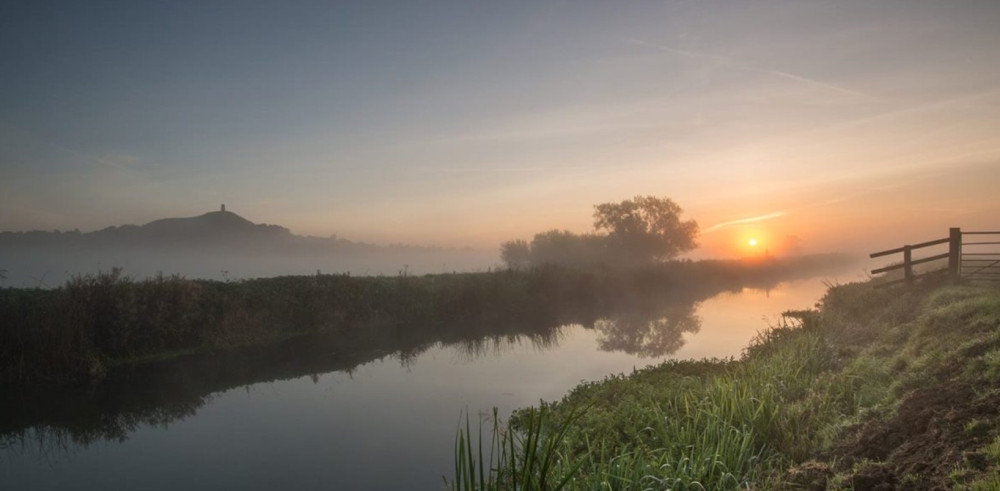
The River Brue has been given six recognised "rights" by Glastonbury Town Council — but the move does not create a new environmental law or suddenly give the river legal powers of its own.
Councillors unanimously adopted the River Brue Charter on Tuesday, 8 September, formally setting out how the council believes the river should be treated and protected in future.
It follows Living Brue Day earlier this year and is part of a wider Rights of Nature movement which seeks to put the needs of rivers and ecosystems more firmly into decisions made about them.
But what will the charter actually do? Here is what you need to know.
What 'rights' has the River Brue been given?
The charter recognises six principles.
It says the River Brue should have the right to follow its natural course as far as possible, perform its essential ecological functions, be free from pollution, feed and be fed by sustainable aquifers, support native biodiversity and regenerate and recover.
When councillors adopted it, the council resolved: "As a declaration as to the importance and value of our river, this council resolves to formally recognise and respect the rights of the River Brue as set forth in the River Charter."
In simple terms, the council is saying that decisions affecting the Brue should take account of what the river itself needs to remain healthy.
Download our Nub News App!
- It’s FREE and available now- Breaking news notifications
- Your Town in Your Pocket


Does that mean the River Brue now has legal rights?
Not in the same sense as rights created by law.
The charter is a declaration of principles. It does not, by itself, give the River Brue legal personhood, create new offences or hand Glastonbury Town Council extra enforcement powers.
That means the charter cannot itself be used to prosecute a polluter, force a landowner to act, overturn a planning decision or compel another authority to change what it is doing.
Existing environmental, planning and regulatory law still applies.
So is it just symbolic?
There is certainly a symbolic element, because the charter is a public statement about how Glastonbury Town Council believes the Brue should be regarded.
But the council argues it can also provide a practical framework for future work.
A spokesperson said: "Adopting the River Brue Charter gives councils and communities a clear framework for supporting the long-term health of the river.
"As more parishes along the Brue consider signing up, the charter also has the potential to create a shared approach across the wider catchment."

That could mean referring back to the charter when projects affecting the river are discussed, using it when councils and community groups work together, or pointing to the principles when developing environmental projects and seeking funding.
Could it help unlock funding?
Glastonbury Town Council says the charter could provide a stronger basis for partnerships, projects and future funding.
Its spokesperson said the charter "creates a clear shared commitment to protect and restore the River Brue" and could give councils along the river "a common set of principles for decision-making".
The council also believes wider adoption could encourage cooperation on water quality, biodiversity and habitat restoration.
But adopting the charter does not itself come with a pot of money, and there is no guarantee that particular grants or projects will follow.
Its value in securing funding will depend on what proposals are subsequently developed and which other organisations become involved.
Why does Glastonbury want other councils involved?
Because the Brue is not Glastonbury's river alone.
It begins near Brewham, close to Bruton, travels across Somerset and the Levels, passes between Glastonbury and Street and eventually reaches the Bristol Channel at Highbridge.

What happens upstream can have consequences many miles downstream, while responsibility for land, water, planning and environmental management is spread across numerous organisations and communities.
The council said: "Rivers cross parish and council boundaries, and their condition depends upon decisions made throughout their catchments.
"Cooperation between communities along the length of a river can therefore give a charter considerably greater reach."
Glastonbury Town Council now wants other town and parish councils along the Brue to consider supporting the charter.
Is this happening anywhere else?
Yes. Similar Rights of Rivers approaches have been adopted elsewhere in the UK.
Glastonbury Town Council has pointed in particular to work on the River Char in Dorset, where a charter sits alongside practical monitoring, pollution investigations and cooperation between river groups.
The idea is that a shared set of principles can help different councils and communities work in the same direction, even though the charter itself does not create new legal powers.
What happens now?
The charter itself does not clean the Brue, restore habitat or stop pollution.
Its test will be what follows.
Glastonbury Town Council says it will seek support from communities and councils elsewhere along the river, while local groups already carry out environmental work around the Brue.
The council said wider adoption could turn the charter into "a common reference point for communities along the Brue, helping to support coordinated action for the river's future".
So, for now, the simplest way to understand the River Brue Charter is this: it is a formal promise about how the council wants the river to be treated, rather than a new law telling everyone else how they must treat it.
Includes reporting from Daniel Mumby/LDRS
More local stories
- Street Minis faces closure unless new coaches step forward
- Glastonbury residents to help choose Abbey Park design
Subscribe to the free Glastonbury Nub News newsletter Get the biggest Glastonbury stories straight to your inbox.
Download our Nub News App:
- It’s FREE and available now
- Breaking news notifications
- Your Town in Your Pocket

Share: